Animal Flowers & the Natural History of Science
I recently purchased a print off of eBay taken from the 1st American edition of the Encyclopedia Britannica, printed in 1797. Having been brushing up on my natural history over […]
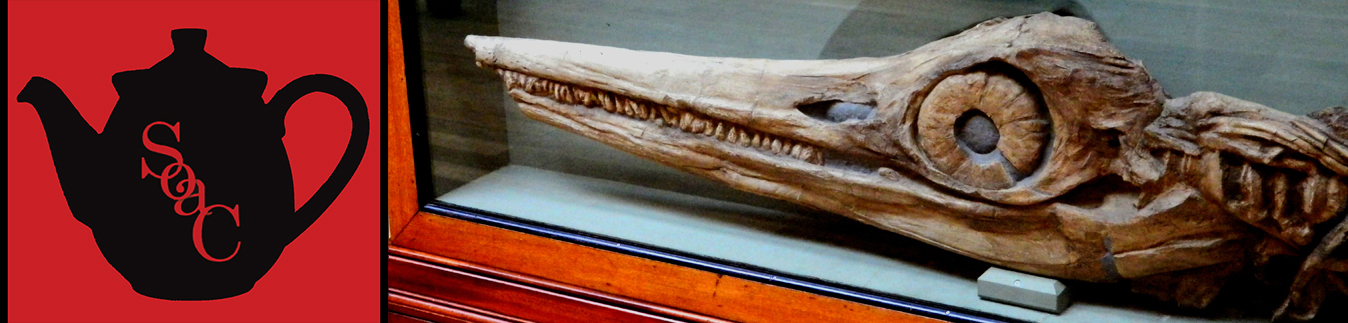
I recently purchased a print off of eBay taken from the 1st American edition of the Encyclopedia Britannica, printed in 1797. Having been brushing up on my natural history over […]
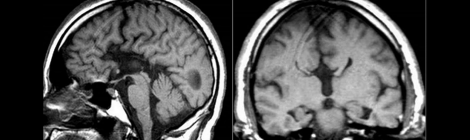
For those who are unfamiliar, the corpus callosum is a large bundle of communicative fibers that connects the two cerebral hemispheres, allowing crosstalk between them. Below are some DTI images […]
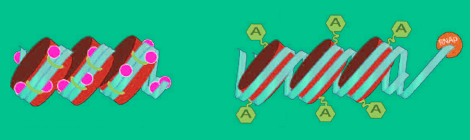
A new study published late last month in Genome Biology entitled, “Contribution of genetic variation to transgenerational inheritance of DNA methylation” reported on what has been a controversial topic for […]

A few years ago, researchers reported that the Fragile X Mental Retardation (FMRP) pathway helps to regulate expression or activity of 93 genes linked with idiopathic autism [1, 2]. FMRP, […]

From left to right: Ami Klin, Laura Klinger, Francesca Happé, and Joe Piven. My fiancé, Manny Casanova, and I just finished attending this year’s International Meeting for Autism Research (IMFAR) […]
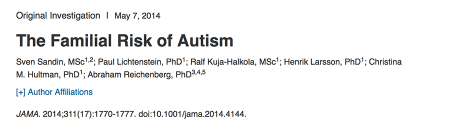
Just this month an article was published in the Journal of the American Medical Association which assessed the familial risk of autism. This was a gigantic population based study on […]

Recently, blogger and trend-seeker-outer, Kas Thomas, reported on his blog, assertTrue( ), a very interesting finding regarding trends in complementary trinucleotides in protein coding genes of organisms with high GC content, […]
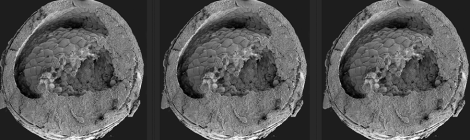
For the past year I’ve been working on a project involving the development of hair. Some of our recent findings involve variations in function of a key protein, a type […]

I hope you’ll all forgive this brief post today. I’ve been buried under insane levels of work for the last several weeks. However, as I was taking a short break […]

An article was published recently in The New England Journal of Medicine by Eric Courchesne’s group, investigating what is essentially evidence of dysplasia (underdevelopment due to prolonged progenitor proliferation at […]
 Science Over a Cuppa
You must be logged in to post a comment.