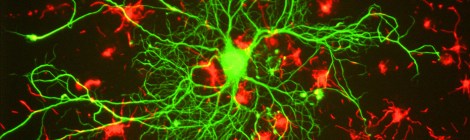
Do Disturbances to Neuronal Maturation Lead to Autism?
A few weeks ago I summarized the findings of our latest study in Frontiers. Unfortunately, I gather as there was almost no interest in the blog that I did a […]

A few weeks ago I summarized the findings of our latest study in Frontiers. Unfortunately, I gather as there was almost no interest in the blog that I did a […]
Just this month we published our latest manuscript in the journal, Frontiers in Cellular Neuroscience, titled, “Genetics studies indicate that neural induction and early neuronal maturation are disturbed in autism.” […]
Unfortunately this week I’m bogged down with a lot of writing (grant, manuscript revision, etc.) and so my post is going to have to be rather short. But I wanted […]
“While in the past, child psychiatry had little interest in operationalised diagnosis, recent trends have made categorical diagnosis an integral part of everyday clinical and research practice. So focused are […]
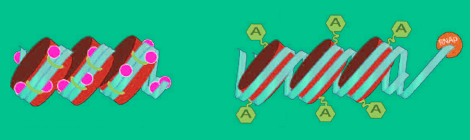
A new study published late last month in Genome Biology entitled, “Contribution of genetic variation to transgenerational inheritance of DNA methylation” reported on what has been a controversial topic for […]

From left to right: Ami Klin, Laura Klinger, Francesca Happé, and Joe Piven. My fiancé, Manny Casanova, and I just finished attending this year’s International Meeting for Autism Research (IMFAR) […]

Recently, blogger and trend-seeker-outer, Kas Thomas, reported on his blog, assertTrue( ), a very interesting finding regarding trends in complementary trinucleotides in protein coding genes of organisms with high GC content, […]

Good question. And it’s been asked before. Usually this question arises within the context of “What use is a larger genome?” when we consider vast genomes such as the onion […]

We recently wrote and submitted a Letter to the Editor of Neuron in response to the recent article by Bundo et al. (2014) reporting increased LINE1 retrotransposition in schizophrenia genomes. […]

It has long been a topic of debate and discussion whether the lop-sided rates of autism diagnosis (males > females) reflects real gender variations in phenotype or simply diagnostic bias. […]


You must be logged in to post a comment.