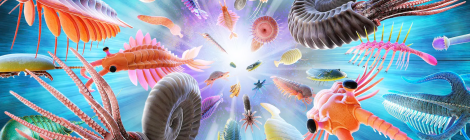
Connecting with Your Inner Autistic Fish
While I plan to continue to produce blogs because I love the written word, I’ve ventured into the Tiktok world and will be posting videos exploring the science of autism, […]
While I plan to continue to produce blogs because I love the written word, I’ve ventured into the Tiktok world and will be posting videos exploring the science of autism, […]

Recently, I did an interview with Seth Chagi on the World of Paleoanthropology about our new paper on the roles of a subset of Neanderthal DNA in autism. Please enjoy!

You’ve heard of the “Cambrian Explosion,” right? The Cambrian period is known for its plethora of bizarre animal forms that seemingly exploded out of nowhere. The period began about 541 […]

There is rapidly growing interest in the relationship between the hereditary connective tissue disorders, Ehlers-Danlos Syndrome (EDS)/hypermobility spectrum disorder (HSD), and autism. As some of my regular readers already know, […]

We recently published an article in Autism Research reporting that autism genes are extremely ancient compared to other genes in the human genome. Illustration by Alexander Glandien. Courtesy of Spectrum News. […]
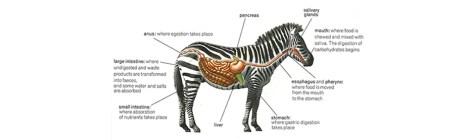
For most people, if they’re at all familiar with Ehlers-Danlos Syndrome (EDS) or the closely related Hypermobility Spectrum Disorders (HSD), when they think of these conditions the first thing that […]
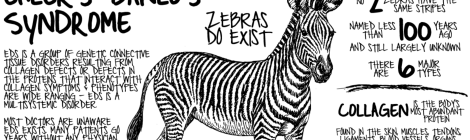
Although much of my research efforts to date have focused on the genetics of autism, over the last year or so I’ve turned a significant part of my attention to […]
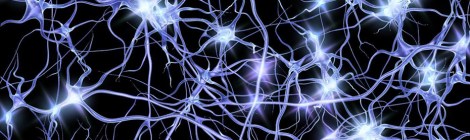
One of the more popular theories explaining autism symptomology concerns an excitatory:inhibitory (E:I) imbalance in the brain [1, 2]. This states that an E:I imbalance leads to overexcitation in pyramidal […]

Certain regions of the human genome seem to be prone towards copy number variations (CNV), which are large rearrangements of DNA that often occur in the form of deletions and […]
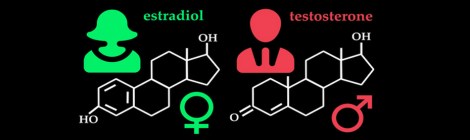
Why is autism diagnosed more often in boys than girls? True, there is some evidence to suggest that the diagnostic criteria themselves were based primarily on males and therefore better […]
 Science Over a Cuppa
You must be logged in to post a comment.