Jumpin’ Genes & Genetic Instability
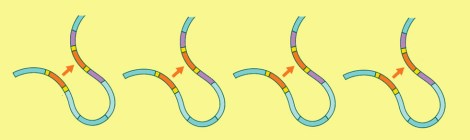
The above image is a segment of exon 4 from the human gene for the Oxytocin receptor (Oxtr). But this ain’t no ordinary exon. This particular segment is in fact […]

The above image is a segment of exon 4 from the human gene for the Oxytocin receptor (Oxtr). But this ain’t no ordinary exon. This particular segment is in fact […]
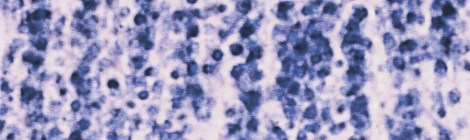
There’s a common saying within the autism community: “If you’ve met one person with autism, you’ve only met one person with autism.” Even though there’s a common core to the […]

Regardless of whatever were the first steps in the origins of life, there is little doubt that the modularity of proto-life’s chemical parts has been a foundational element to Self-replication […]
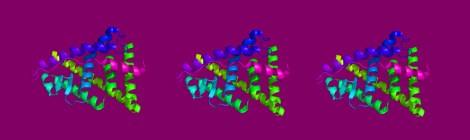
I took an Endocrinology course awhile back with a professor who has been in the field of cancer research for decades. Along with a growing number of researchers, he had […]

Proposing that prenatal ultrasound is a potential teratogen sounds like pseudoscience to most people, I realize this. Hell, when my partner came to me with the idea even I thought […]

More and more the traditional view of genetic structure and function is being challenged. In an article published in Science in April, 2012, a group of scientists out of the University of […]
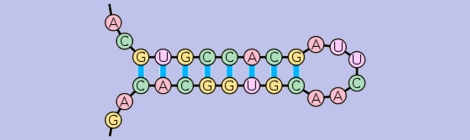
Mosaicism: indicates the presence of two or more populations of cells with different genotypes in one individual who has developed from a single fertilized egg [1]. For some time, layperson […]
Continuity. Indivisible systems. One node connected to another connected to another, each pulling and pushing against the weight of its partners. Try to analyze the individual constituents of most systems […]

“[The ENCODE scientists have] . . . reported the elephant in the room and then chosen to otherwise ignore it.” ~Prof. John Mattick, Director of the Garvan Institute of Medical […]
Hello, folks. Back in September, a seminal group of works were published in Nature and Science which revealed that contrary to our once-protein-centric view of genetics, the majority of gene […]
 Science Over a Cuppa
You must be logged in to post a comment.