
An Update on My Current Work: Bald Mice & Autism Genomics
I gotta be honest: my brain is pretty fried this weekend. After each sentence I type here I find myself staring off into space snatching some microsleep. Ya ever feel […]
I gotta be honest: my brain is pretty fried this weekend. After each sentence I type here I find myself staring off into space snatching some microsleep. Ya ever feel […]
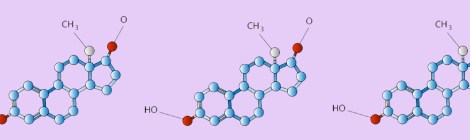
Back in 2012, researchers associated with the M.I.N.D. Institute in California reported a study in which significant links were found between a “Metabolic Syndrome” in mothers and the occurrence of […]

Since I’m going to be out of town on vacation for the next several weeks traveling over to England, my fiancé, Dr. Manuel Casanova, will be providing one or two […]
This week is the third and final entry in the series, Syndromic Forms of Autism. It covers an additional five syndromes which exhibit high association with autism. As with the […]
This week I’ll continue reviewing more forms of high-association syndromic autism. Some of the conditions I’m writing about today include not only targeted gene mutations, as in the case of […]

Even though, at face value, cancer and autism may seem like worlds apart, if you take a look at their respective genetics you may find more similarities than you bargained […]
“An extremely large number of genes have been associated with autism. The functions of these genes span numerous domains and prove challenging in the search for commonalities underlying the conditions. […]
I’ve talked a lot about DNA mutations, transposons and retrotransposons, microsatellite repeat sequences in cancer and autism, and even somatic mosaicism on this blog. But I haven’t really talked about […]

A “housekeeping” gene is a gene which is constitutively or constantly expressed and is necessary for basic cellular functions. “Contingency” genes, on the other hand, produce gene products which are, […]

Let’s face it. Exons get all the glory. They’re the star players of the game, the quarterbacks, the offensive line. Meanwhile, introns and other intergenic regions play a more defensive […]
 Science Over a Cuppa
You must be logged in to post a comment.