
The Molecular Basis of Punctuated Equilibria aka “Punkeek”
A little update! I know it’s been an incredibly long time since I’ve posted on SoaC, primarily because I’ve been expanding my science communication on platforms like TikTok and Youtube. […]
A little update! I know it’s been an incredibly long time since I’ve posted on SoaC, primarily because I’ve been expanding my science communication on platforms like TikTok and Youtube. […]
While I plan to continue to produce blogs because I love the written word, I’ve ventured into the Tiktok world and will be posting videos exploring the science of autism, […]
For those of you who have “been around the block” in the online autistic community, you’ve probably heard of the “Neanderthal Theory of Autism,” proposed by rdos (Leif Ekblad) back […]
Most of you undoubtedly know me as an autism researcher. But my work has brought me into close contact with the field of Evolutionary Biology as I’ve studied the evolution […]
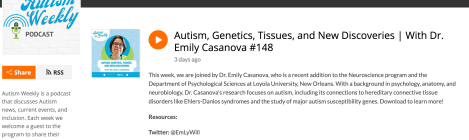
Recently, I had the enjoyable experience of being interviewed for the podcast, Autism Weekly, by Jeffrey Skibitsky. Jeff’s a super-nice guy, great host, and I had a lovely time. I […]
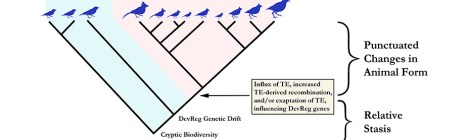
Most of you probably know that I blog primarily about autism and Ehlers-Danlos syndrome (EDS). But as the header on Science Over a Cuppa hints, I have a secret– shall […]
Apologies for my blogging absence, everyone. I’m working towards a rapidly-approaching book deadline and much of my writing energies have gone towards that project. However, rest assured, my blogging will […]

Although it’s a difficult topic to study, because the human species has experienced a number of population bottlenecks over time it’s assumed that rates of consanguinous (close kinship) marriage or […]

Let’s face it: humans are kinda narcissistic. For those of us who are evolutionarily-minded, as such we have a tendency to envision ourselves as lying at the pinnacle of eukaryotic […]

Okay, so gene evolution isn’t entirely about regulation. But protein-coding sequences of genes have changed comparatively little over hundreds of millions of years. When you look at the proteins that […]
 Science Over a Cuppa
You must be logged in to post a comment.