
Alu Transposable Elements and the Human Genome
For those not familiar, transposable or mobile elements are segments of DNA that have, or at one time had, the potential for moving about the genome. This occurs either via […]

For those not familiar, transposable or mobile elements are segments of DNA that have, or at one time had, the potential for moving about the genome. This occurs either via […]

From left to right: Ami Klin, Laura Klinger, Francesca Happé, and Joe Piven. My fiancé, Manny Casanova, and I just finished attending this year’s International Meeting for Autism Research (IMFAR) […]

Good question. And it’s been asked before. Usually this question arises within the context of “What use is a larger genome?” when we consider vast genomes such as the onion […]

We recently wrote and submitted a Letter to the Editor of Neuron in response to the recent article by Bundo et al. (2014) reporting increased LINE1 retrotransposition in schizophrenia genomes. […]

Scientists this month reported on the whole-genome sequencing of the cartilaginous fish, the elephant shark, the first complete analysis of any of the non-bony fish [1]. These fish are very […]

Now, for repeat readers, you probably know I have a professional interest in the topic of transposable elements. So it should come as no surprise that a recent article published […]

“This raises a question: if merely reading a genome differently can change organisms so wildly, why bother rewriting the genome to evolve? How vital, really, are actual changes in the […]

I gotta be honest: my brain is pretty fried this weekend. After each sentence I type here I find myself staring off into space snatching some microsleep. Ya ever feel […]

“From our very early days we learn to react to situations with the appropriate responses, linguistic or otherwise. The teaching procedures both shape the ‘appearance’, or ‘phenomenon’, and establish a […]
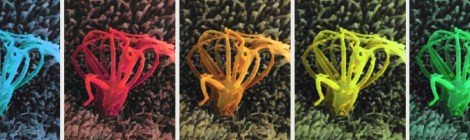
Compared to vision and audition, the sense of smell is an exceptionally ancient one. And you might be surprised but the ability to detect odorous particles (also known as chemosensation) […]
 Science Over a Cuppa
You must be logged in to post a comment.