
All Roads Once Led to Rome… But Do All Roads Lead to Autism??
Even though, at face value, cancer and autism may seem like worlds apart, if you take a look at their respective genetics you may find more similarities than you bargained […]
Even though, at face value, cancer and autism may seem like worlds apart, if you take a look at their respective genetics you may find more similarities than you bargained […]
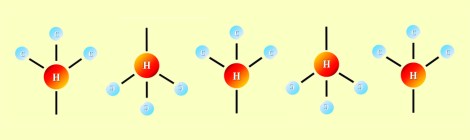
The Methylome is a new toy of genetic science. It adds yet another level of complexity “above genetics”, responsible for affecting patterns of gene expression and, relevant to my line […]
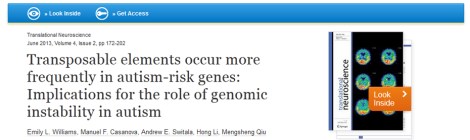
“An extremely large number of genes have been associated with autism. The functions of these genes span numerous domains and prove challenging in the search for commonalities underlying the conditions. […]
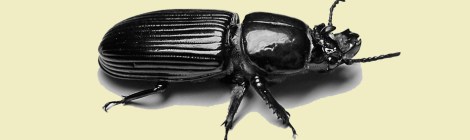
How is the word “function” like a beetle in a box? No, this isn’t a twist on the Mad Hatter’s “Why is a raven like a writing desk?” As I’ve […]
I’ve talked a lot about DNA mutations, transposons and retrotransposons, microsatellite repeat sequences in cancer and autism, and even somatic mosaicism on this blog. But I haven’t really talked about […]

Cancer. The thought of it can be absolutely terrifying. Moreso than heart disease, stroke, or Alzheimer’s. Maybe because its diagnosis often seems so out of the blue, or because we […]

A “housekeeping” gene is a gene which is constitutively or constantly expressed and is necessary for basic cellular functions. “Contingency” genes, on the other hand, produce gene products which are, […]

Metal ions. DNA just doesn’t work right without them. Or much of biology for that matter. Back in the 1980s, Graham Cairns-Smith postulated that, rather than nucleic acids forming the […]

There was a recent article in The New Yorker titled, “Steamrolled by Big Data,” which reminded me of the trend occurring now in the Life Sciences. Even though, unlike Google, […]

Let’s face it. Exons get all the glory. They’re the star players of the game, the quarterbacks, the offensive line. Meanwhile, introns and other intergenic regions play a more defensive […]


You must be logged in to post a comment.