Are Changes in the Epigenome Actually due to the Dynamic Nature of DNA?
I could be totally wrong on this one, which is cool. Happens often enough. And I won’t profess to be an expert in epigenetics, though I’m not completely ignorant of […]
I could be totally wrong on this one, which is cool. Happens often enough. And I won’t profess to be an expert in epigenetics, though I’m not completely ignorant of […]

“From our very early days we learn to react to situations with the appropriate responses, linguistic or otherwise. The teaching procedures both shape the ‘appearance’, or ‘phenomenon’, and establish a […]
Compared to vision and audition, the sense of smell is an exceptionally ancient one. And you might be surprised but the ability to detect odorous particles (also known as chemosensation) […]

Even though, at face value, cancer and autism may seem like worlds apart, if you take a look at their respective genetics you may find more similarities than you bargained […]
The Methylome is a new toy of genetic science. It adds yet another level of complexity “above genetics”, responsible for affecting patterns of gene expression and, relevant to my line […]
“An extremely large number of genes have been associated with autism. The functions of these genes span numerous domains and prove challenging in the search for commonalities underlying the conditions. […]
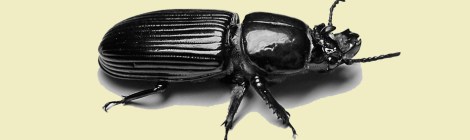
How is the word “function” like a beetle in a box? No, this isn’t a twist on the Mad Hatter’s “Why is a raven like a writing desk?” As I’ve […]
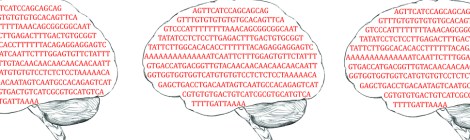
I’ve talked a lot about DNA mutations, transposons and retrotransposons, microsatellite repeat sequences in cancer and autism, and even somatic mosaicism on this blog. But I haven’t really talked about […]

Cancer. The thought of it can be absolutely terrifying. Moreso than heart disease, stroke, or Alzheimer’s. Maybe because its diagnosis often seems so out of the blue, or because we […]

A “housekeeping” gene is a gene which is constitutively or constantly expressed and is necessary for basic cellular functions. “Contingency” genes, on the other hand, produce gene products which are, […]
 Science Over a Cuppa
You must be logged in to post a comment.