The Symbiotic Gene
“I shall argue that a predominant quality to be expected in a successful gene is ruthless selfishness” (Dawkins, 1976). So wrote the evolutionary biologist, Richard Dawkins, in Chapter One of […]
“I shall argue that a predominant quality to be expected in a successful gene is ruthless selfishness” (Dawkins, 1976). So wrote the evolutionary biologist, Richard Dawkins, in Chapter One of […]
I could be totally wrong on this one, which is cool. Happens often enough. And I won’t profess to be an expert in epigenetics, though I’m not completely ignorant of […]

This week is the third and final entry in the series, Syndromic Forms of Autism. It covers an additional five syndromes which exhibit high association with autism. As with the […]
The Methylome is a new toy of genetic science. It adds yet another level of complexity “above genetics”, responsible for affecting patterns of gene expression and, relevant to my line […]
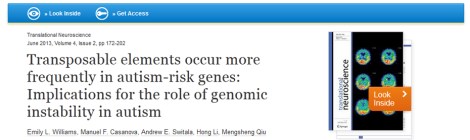
“An extremely large number of genes have been associated with autism. The functions of these genes span numerous domains and prove challenging in the search for commonalities underlying the conditions. […]
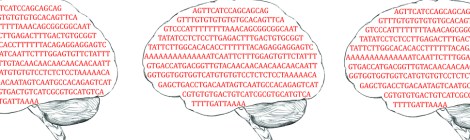
I’ve talked a lot about DNA mutations, transposons and retrotransposons, microsatellite repeat sequences in cancer and autism, and even somatic mosaicism on this blog. But I haven’t really talked about […]

Cancer. The thought of it can be absolutely terrifying. Moreso than heart disease, stroke, or Alzheimer’s. Maybe because its diagnosis often seems so out of the blue, or because we […]
My partner has adored chess ever since he was a child.While I’m no aficiando like he is, there’s something easy to romanticize about the game. The sheer artistry of the […]
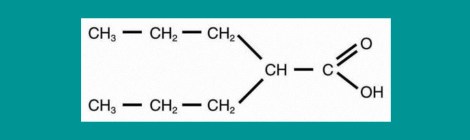
As a medicine, valproic acid (VPA) has a variety of uses. Not only does it serve as an antiepileptic drug, it can also be used for mood stabilization in Bipolar, […]
Hello, folks. Back in September, a seminal group of works were published in Nature and Science which revealed that contrary to our once-protein-centric view of genetics, the majority of gene […]
 Science Over a Cuppa
You must be logged in to post a comment.